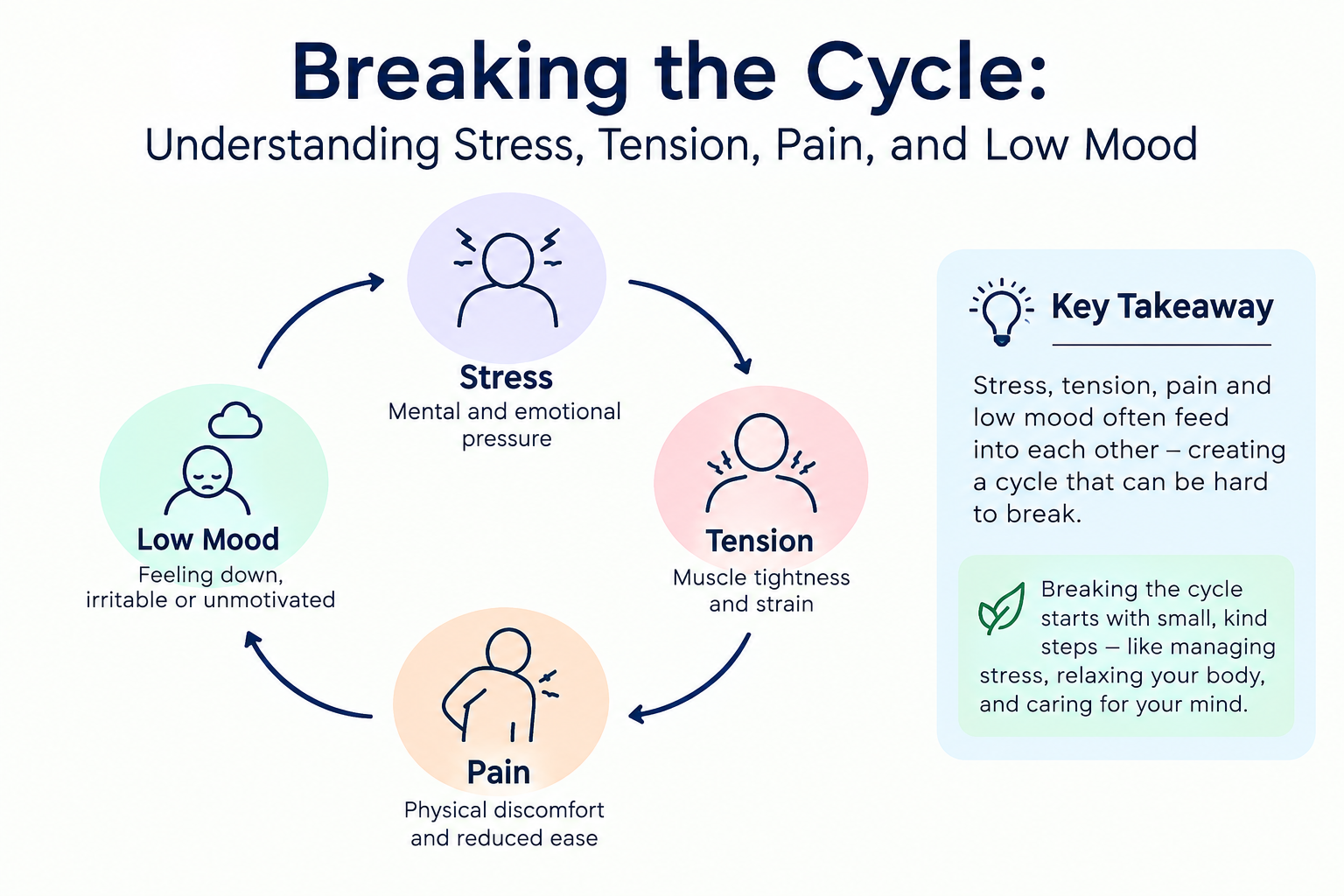
Stress, muscle tension, physical pain, and low mood can sometimes feel like completely separate problems. In reality, they may influence one another in ways that are easy to overlook.
A stressful period can leave your muscles tight. Persistent muscle tension may contribute to discomfort or headaches. Ongoing pain can interfere with sleep and everyday activities. Poor sleep and reduced activity may then affect your mood, leaving you feeling discouraged or emotionally drained.
This can create a stress-tension-pain-low mood cycle that becomes difficult to break.
Understanding this connection doesn't mean that every physical symptom is caused by stress. Pain and mood changes can have many medical and psychological causes and deserve appropriate evaluation.
What Is the Stress-Pain-Mood Cycle?
Think of the cycle as a series of connected experiences:
Stress → muscle tension → discomfort → disrupted sleep/activity → low mood → more stress → increased sensitivity to symptoms
The cycle doesn't necessarily happen in exactly this order for everyone.
For some people, chronic pain comes first. For others, emotional stress or anxiety may lead to muscle tension. Depression can also reduce motivation to move, socialize, exercise, or maintain healthy routines, which may make physical discomfort more difficult to manage.
The important point is that physical and emotional well-being can affect each other.
How Stress Can Affect Your Muscles
When you're stressed, your body activates systems designed to help you respond to perceived threats.
You may unconsciously tighten your shoulders, neck, jaw, back, or other muscle groups. This can be particularly noticeable when you're concentrating, worried, driving, working at a computer, or dealing with prolonged emotional pressure.
You might notice:
Tight shoulders
A stiff neck
Jaw clenching
Muscle soreness
Tension around the upper back
Head or facial discomfort
Feeling physically "on edge"
Short-term muscle tension is a normal response. The problem can arise when the body remains tense for extended periods or when repeated stress keeps triggering the same response.
Why Muscle Tension Can Contribute to Pain
Muscle tension doesn't automatically mean that pain will develop, but prolonged tension can contribute to discomfort in some people.
For example, spending hours with elevated shoulders while working at a desk may leave the neck and upper-back muscles feeling tired and uncomfortable.
Similarly, repeatedly clenching your jaw during stressful situations may contribute to jaw or facial discomfort.
Pain itself can then become another source of stress.
You may start thinking:
"Why isn't this going away?"
"What if it gets worse?"
"Why does my body hurt so much?"
Those thoughts can increase worry, which may contribute to additional muscle tension.
Pain Can Affect Your Mood
Persistent pain can change everyday life.
You might stop exercising because movement feels uncomfortable. You may sleep poorly. You may decline social activities because you're tired or uncomfortable. Work may become more difficult.
Over time, these changes can affect emotional well-being.
Someone who was previously active may suddenly spend more time resting. Someone who enjoyed meeting friends may begin staying home. Someone who slept well may start waking repeatedly because of discomfort.
These changes don't automatically mean someone has depression, but living with persistent pain can be emotionally exhausting.
The World Health Organization notes that chronic pain can affect functioning and quality of life and may be associated with psychological distress. WHO — Chronic Pain
How Low Mood Can Change the Experience of Pain
The relationship also works in the opposite direction.
When someone is experiencing depression or persistent low mood, they may have less energy and motivation. Activities that once seemed manageable can feel overwhelming.
This can lead to:
Less activity → reduced physical conditioning → more stiffness or fatigue → greater difficulty staying active
Depression can also affect sleep, concentration, appetite, motivation, and the way a person experiences everyday challenges.
This doesn't mean that pain is "all in your head."
Pain is real.
Mental health can influence how the nervous system processes and responds to pain without making the pain imaginary.
Why Poor Sleep Can Make Everything Feel Worse
Sleep is another important piece of the cycle.
Pain can make it harder to sleep, while insufficient or disrupted sleep can make it harder to cope with discomfort and stress.
After a poor night's sleep, you may have less patience, less energy, and less ability to regulate emotions.
You might also become more aware of physical sensations that you would normally ignore.
This can create another loop:
Pain → poor sleep → fatigue → increased stress → greater difficulty coping with pain
Breaking the cycle therefore doesn't always mean focusing exclusively on pain.
Improving sleep may be one useful part of the overall approach.
Anxiety Can Add Another Layer
Anxiety can make people highly attentive to physical sensations.
A normal muscle twitch, heartbeat, stomach sensation, or brief ache may suddenly attract intense attention.
You might begin monitoring your body:
"Is that pain getting worse?"
"Why is my heart beating like that?"
"Why is my neck still tight?"
Constantly checking symptoms can increase worry, which may make the sensations feel even more noticeable.
This doesn't mean symptoms aren't real. It means that attention, stress, and physical sensations can interact.
For people experiencing significant anxiety or panic symptoms, professional support can be helpful. The National Institute of Mental Health provides information about anxiety disorders, including symptoms and treatment approaches. NIMH — Anxiety Disorders
Why Avoiding Movement Can Sometimes Backfire
When something hurts, avoiding movement can feel like the safest choice.
Rest can be appropriate for certain injuries and medical conditions, so pain should never be ignored.
However, for many common chronic pain conditions, prolonged inactivity may contribute to stiffness, reduced strength, and loss of confidence in movement.
That's why healthcare professionals often recommend an appropriate, gradual return to physical activity rather than complete inactivity when medically appropriate.
The key is gradual and appropriate movement, not pushing through severe pain.
Walking, gentle stretching, mobility exercises, strengthening exercises, or physical therapy may be useful depending on the cause of the pain.
Small Ways to Start Breaking the Cycle
You don't necessarily need to make dramatic changes.
Start with small, manageable steps.
1. Notice Where You Hold Tension
Several times a day, check your:
Jaw
Shoulders
Neck
Hands
Upper back
Ask yourself:
"Am I tensing these muscles right now?"
If you are, gently relax them rather than forcefully stretching.
2. Add Short Movement Breaks
If you sit for long periods, stand up and move around periodically.
A short walk can be more realistic than promising yourself an intense workout every day.
Consistency matters more than perfection.
3. Create a Better Sleep Routine
Try maintaining relatively consistent sleep and wake times.
Keep your bedroom comfortable and develop a calming wind-down routine before bed.
Adults generally need at least seven hours of sleep per night, although individual requirements vary. CDC — About Sleep
4. Don't Completely Isolate Yourself
Pain and low mood can make people withdraw from others.
You don't need to attend a large social event. A phone call, short conversation, or brief visit with someone you trust can be a meaningful first step.
5. Use Relaxation Techniques
Slow breathing, mindfulness, progressive muscle relaxation, or another relaxation technique may help reduce stress for some people.
The goal isn't to eliminate every stressful thought.
It's to give your nervous system opportunities to settle.
6. Track Patterns Instead of Constantly Checking Symptoms
Instead of repeatedly asking yourself whether you're hurting, consider keeping a simple journal.
Record:
Sleep
Activity
Stressful events
Mood
Pain intensity
What seemed to help
Patterns may become easier to recognize over time.
When Should You Talk to a Healthcare Professional?
Persistent pain shouldn't automatically be attributed to stress.
Talk with a healthcare professional if pain:
Persists or repeatedly returns
Interferes with everyday activities
Is progressively worsening
Is associated with significant weakness or numbness
Started after a significant injury
Is accompanied by other concerning symptoms
Similarly, persistent low mood deserves attention.
If you've been feeling hopeless, withdrawn, exhausted, or unable to enjoy things you normally enjoy for an extended period, consider speaking with a qualified mental-health professional or healthcare provider.
If you have thoughts of harming yourself or feel unable to stay safe, seek immediate emergency help or contact a local crisis service.
Treatment Doesn't Have to Focus on Just One Problem
One of the biggest lessons from the stress-pain-mood connection is that there may not be one single solution.
Someone experiencing persistent pain may benefit from physical rehabilitation.
Someone struggling with anxiety may benefit from psychological treatment.
Someone experiencing depression may need mental-health support.
Someone with a medical cause of pain may require condition-specific treatment.
And sometimes several approaches are needed at the same time.
A healthcare professional can help determine whether symptoms are related, separate, or caused by another underlying condition.
The Goal Isn't to Eliminate Every Sensation
Everyone experiences stress, tension, discomfort, fatigue, and changes in mood from time to time.
The goal isn't to live a life where you never experience an uncomfortable sensation.
Instead, the goal is to develop healthier ways of responding when these experiences occur.
You can learn to notice tension without panicking about it.
You can gradually return to appropriate activity instead of automatically avoiding movement.
You can take your pain seriously without allowing it to completely define your day.
And you can recognize low mood as something worth addressing rather than simply something you have to endure.
Final Thoughts
Stress, muscle tension, pain, poor sleep, anxiety, and low mood can interact in complicated ways.
Sometimes one problem begins the cycle. Sometimes several appear together. And sometimes physical symptoms have an entirely different medical cause.
The most useful approach is to look at the whole picture rather than treating every symptom as an isolated problem.
Small changes—better sleep, appropriate movement, relaxation, social connection, and professional support when needed—can gradually make the cycle easier to manage.
Breaking the cycle doesn't usually happen overnight. It starts with understanding what's happening and taking one manageable step at a time.