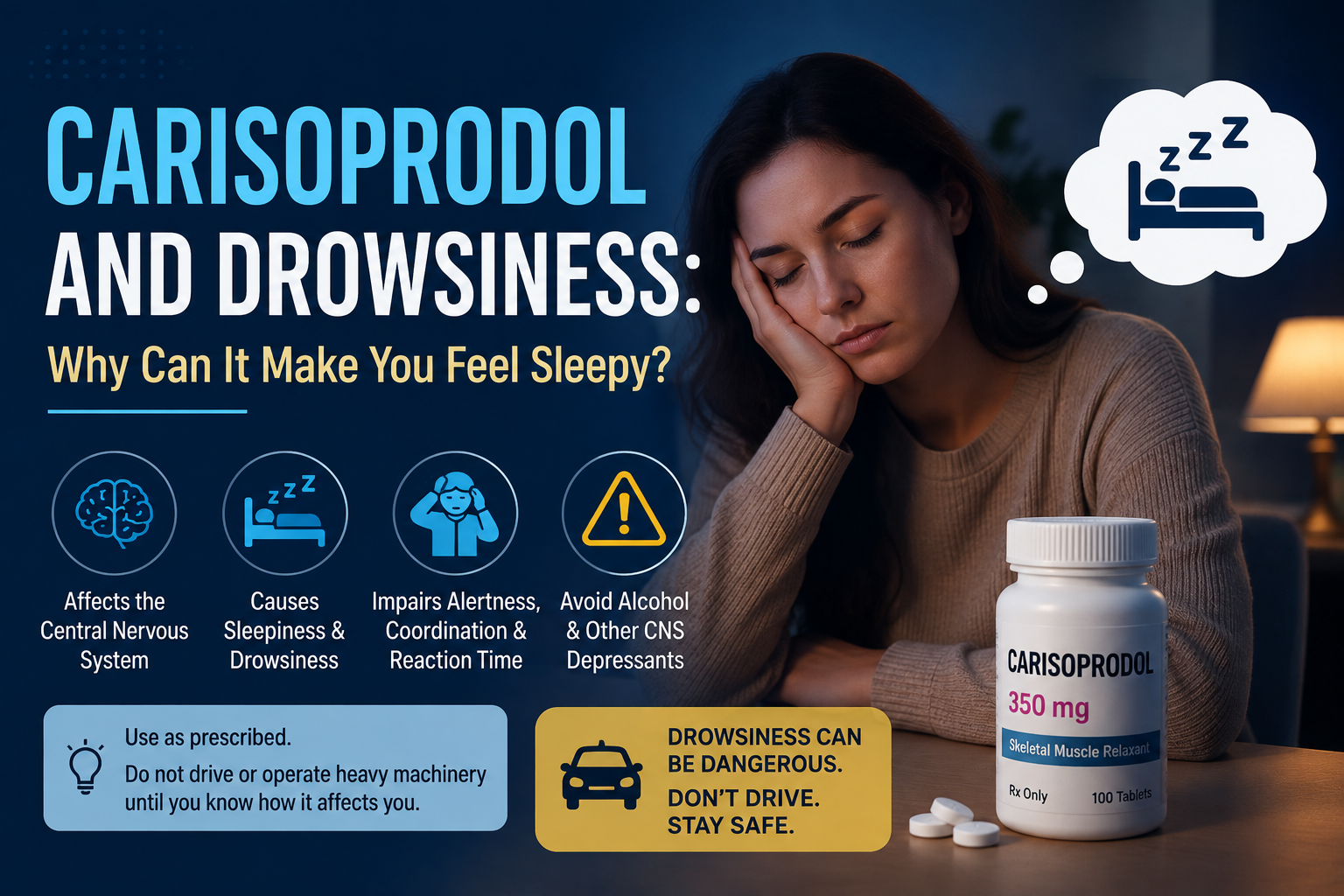
Carisoprodol is a prescription skeletal muscle relaxant used alongside rest, physical therapy, and other measures to relieve discomfort associated with acute, painful musculoskeletal conditions. One of its most commonly recognized effects is drowsiness, which can be noticeable enough to affect concentration, coordination, and everyday activities.
But why does a medication intended to help with muscle discomfort make some people feel sleepy?
The answer involves the way carisoprodol and its metabolites affect the central nervous system. Understanding this effect is important because drowsiness isn't simply an inconvenience—it can affect driving, work, balance, and the safety of combining carisoprodol with alcohol or other sedating medications.
Important: Carisoprodol is a prescription medication. This article is for educational purposes and does not replace advice from a doctor or pharmacist.
What Is Carisoprodol?
Carisoprodol is a skeletal muscle relaxant prescribed for short-term relief of discomfort associated with acute musculoskeletal conditions.
It is generally used together with measures such as:
The current U.S. prescribing information states that carisoprodol should be used for acute treatment periods of up to two or three weeks.
Carisoprodol isn't simply a medication that "loosens" a muscle directly. Its effects involve the brain and nervous system, which helps explain why it can also cause central nervous system effects such as drowsiness and dizziness.
Why Does Carisoprodol Make You Sleepy?
The main reason is that carisoprodol has sedative properties.
Rather than acting exclusively at the painful or tense muscle itself, carisoprodol influences central nervous system activity. This can reduce certain sensations associated with muscle discomfort while also producing effects such as:
Sleepiness
Drowsiness
Dizziness
Reduced alertness
Slower reactions
Impaired coordination
The official prescribing information identifies drowsiness and dizziness among the most common adverse reactions.
In simple terms:
The same central nervous system effects that contribute to carisoprodol's muscle-relaxing action can also make you feel tired or sleepy.
Carisoprodol Doesn't Work Like a Normal Painkiller
It's useful to understand that carisoprodol isn't primarily an ordinary painkiller.
Its purpose is to help relieve discomfort associated with acute musculoskeletal conditions, particularly when muscle spasm or related discomfort is part of the problem.
MedlinePlus explains that carisoprodol works by acting on the brain and nervous system to allow muscles to relax.
That's different from medications that primarily target inflammation or directly reduce pain signaling.
This distinction can help explain why someone taking carisoprodol might notice a combination of:
Muscle relaxation + reduced discomfort + drowsiness
How Common Is Drowsiness With Carisoprodol?
Drowsiness is a well-established effect of the medication.
In clinical trials referenced in the prescribing information, 13%–17% of patients receiving SOMA experienced sedation, compared with 6% receiving placebo in low-back-pain trials.
However, individual experiences vary.
One person may experience mild sleepiness, while another may feel significantly impaired.
Factors that can influence how strongly someone experiences sedation include:
Why Do Some People Feel Extremely Sleepy?
Several factors can make sedation more noticeable.
1. Individual Sensitivity
People respond differently to medications.
A dose that produces relatively mild drowsiness in one person may make another person feel considerably more tired or dizzy.
That's why patients should pay attention to how carisoprodol affects them rather than assuming they will respond the same way as someone else.
2. Other Sedating Medicines
One of the most important considerations is whether you're taking other medications that also depress the central nervous system.
Carisoprodol's sedative effects can be additive with other CNS depressants, including:
The official prescribing information specifically warns about additive sedation when carisoprodol is combined with CNS depressants.
This is particularly important with medications such as:
Tramadol or other opioids + carisoprodol
Alprazolam (Xanax) + carisoprodol
Lorazepam (Ativan) + carisoprodol
Diazepam (Valium) + carisoprodol
These combinations should not be used casually or without medical guidance because multiple CNS-depressing substances can produce substantially greater sedation and impairment.
The FDA has also warned about serious risks when opioids are combined with benzodiazepines or other CNS depressants, including extreme sleepiness and potentially life-threatening breathing problems.
Carisoprodol and Alcohol: Why Is the Combination Concerning?
Alcohol can increase the sedating effects of carisoprodol.
Someone who feels moderately sleepy after taking carisoprodol may become substantially more impaired after consuming alcohol.
Possible concerns include:
The medication information from MedlinePlus advises patients to discuss alcohol use with their healthcare professional because alcohol can worsen carisoprodol's side effects.
Avoid combining carisoprodol with alcohol unless your healthcare professional specifically tells you otherwise.
Can Carisoprodol Affect Driving?
Yes.
This is one of the most important practical consequences of its sedating effects.
Carisoprodol can impair the mental and physical abilities needed for potentially hazardous activities, including driving and operating machinery. The official labeling reports post-marketing cases of motor vehicle accidents associated with SOMA.
If you've just started carisoprodol or your dose has changed, you should be especially cautious about activities requiring:
Fast reactions
Concentration
Balance
Precise coordination
Clear judgment
A simple rule:
Don't drive simply because you think you can stay awake.
Feeling awake doesn't necessarily mean your coordination and reaction time have returned to normal.
Why Can Carisoprodol Cause Dizziness Too?
Drowsiness and dizziness often occur together because both can reflect effects on the central nervous system.
You might notice:
Feeling lightheaded
Feeling unsteady
Difficulty concentrating
A "heavy" feeling
Slower reactions
Reduced coordination
MedlinePlus lists dizziness and drowsiness among carisoprodol's potential side effects.
If dizziness is severe, persistent, or accompanied by other concerning symptoms, contact your healthcare professional.
Is Feeling Sleepy After Carisoprodol Normal?
Some degree of drowsiness can be an expected side effect.
However, extreme or unusual sleepiness should not simply be ignored, especially if you're also taking other medications that cause sedation.
Contact a healthcare professional if you're experiencing:
Severe breathing problems or inability to wake normally can be an emergency.
Does Carisoprodol Make Everyone Sleepy?
No.
Although drowsiness is common, people respond differently.
Some people may experience noticeable sedation, while others may mainly notice muscle relaxation or dizziness.
Others may experience little or no drowsiness.
The response can also change over time or when other medications are added.
That's one reason medication reviews are important.
Why Is Carisoprodol Usually Used Short-Term?
Carisoprodol is generally intended for short-term treatment, not indefinite management of chronic musculoskeletal symptoms.
The current U.S. labeling recommends a maximum treatment period of two or three weeks for acute musculoskeletal discomfort.
Longer use may raise concerns about:
Dependence
Withdrawal
Abuse
Continued sedation
Persistent impairment
The prescribing information reports cases of dependence, withdrawal, and abuse associated with prolonged use.
If muscle symptoms continue beyond the expected treatment period, further medical evaluation may be appropriate rather than simply continuing the medication.
Can Carisoprodol Cause Dependence?
Yes.
Although carisoprodol is prescribed for legitimate medical purposes, prolonged use can be associated with dependence, withdrawal, and abuse.
This is particularly important for people who have a history of substance-use problems or who are taking multiple medications with abuse potential.
If you've been taking carisoprodol regularly for an extended period, don't make major changes to your treatment plan without discussing them with your healthcare professional.
What Should You Do If Carisoprodol Makes You Too Sleepy?
Start by talking with your doctor or pharmacist.
They may want to review:
Your current medication
The reason you're taking it
Other prescription medications
Over-the-counter products
Alcohol consumption
Your sleep schedule
Other health conditions
How long you've been taking carisoprodol
Don't increase, decrease, or combine medications simply to counteract sleepiness.
If another medication is contributing to the sedation, your healthcare professional may need to reassess the overall medication regimen.
Carisoprodol and Other Medications: Why the Full List Matters
People sometimes think drug interactions only involve prescription medications.
But sedating effects can potentially be increased by several types of substances.
Always tell your healthcare professional about:
A pharmacist can be particularly helpful when you're unsure whether two medications can safely be taken together.
Is Carisoprodol the Same as a Sleeping Pill?
No.
Carisoprodol isn't primarily prescribed as a sleep medication.
Its indication is for acute painful musculoskeletal conditions, and the sleepiness it causes is a side effect/sedative effect, not the primary purpose of treatment.
This distinction matters because intentionally using carisoprodol simply to make yourself sleep isn't appropriate unless a healthcare professional has specifically determined that its use is medically appropriate.
What Can You Do About Mild Drowsiness?
If your healthcare professional has prescribed carisoprodol, practical precautions can help reduce the consequences of drowsiness.
Consider:
Taking it exactly as prescribed
Don't take extra doses because you think the medication isn't working.
Avoiding alcohol
Alcohol can worsen sedation.
Avoiding driving until you know how it affects you
The official labeling specifically warns about impairment and driving.
Reviewing other medications
Tell your doctor or pharmacist about all substances that could cause sedation.
Following the prescribed duration
Carisoprodol is generally intended for short-term treatment.
When Is Drowsiness a Warning Sign?
Mild sleepiness may be an expected adverse effect, but severe sedation can be concerning.
Seek urgent medical attention if someone taking carisoprodol develops:
Difficulty breathing
Severe or worsening confusion
Loss of consciousness
Inability to wake normally
Severe weakness or unresponsiveness
The risk becomes particularly important when multiple CNS depressants are involved.
Frequently Asked Questions
Why does carisoprodol make me sleepy?
Carisoprodol has sedative effects on the central nervous system. Drowsiness is one of its most common adverse reactions.
Is drowsiness a common side effect of carisoprodol?
Yes. Drowsiness and dizziness are among the most common adverse effects reported with carisoprodol.
Can I drive after taking carisoprodol?
Carisoprodol can impair alertness, coordination, and physical or mental abilities needed for safe driving. Don't drive or operate machinery until you know how the medication affects you and your healthcare professional has advised you appropriately.
Can I drink alcohol while taking carisoprodol?
Alcohol can worsen carisoprodol's sedative effects. Discuss alcohol use with your healthcare professional and generally avoid combining them unless specifically advised otherwise.
Can carisoprodol be taken with Xanax, Ativan, Valium, or opioids?
These medications can all contribute to central nervous system depression. Carisoprodol's labeling warns that its sedative effects may be additive with benzodiazepines and opioids. Such combinations should only be used under appropriate medical supervision.
How long is carisoprodol normally used?
The U.S. prescribing information recommends limiting treatment to two or three weeks for acute musculoskeletal discomfort.
Final Thoughts
Carisoprodol can make you sleepy because it has central nervous system–depressant and sedative effects in addition to its muscle-relaxing effects. Drowsiness and dizziness are recognized adverse reactions, and the medication can interfere with the alertness and coordination needed for driving or operating machinery.
The biggest safety consideration is that sedation can become stronger when carisoprodol is combined with alcohol, benzodiazepines, opioids, or other CNS depressants.
If carisoprodol makes you unusually sleepy, don't simply compensate by changing your dose or adding another medication. Talk with your doctor or pharmacist so the entire medication regimen can be reviewed safely.
Helpful authoritative resources: MedlinePlus — Carisoprodol Drug Information and DailyMed — Current SOMA (carisoprodol) Prescribing Information.