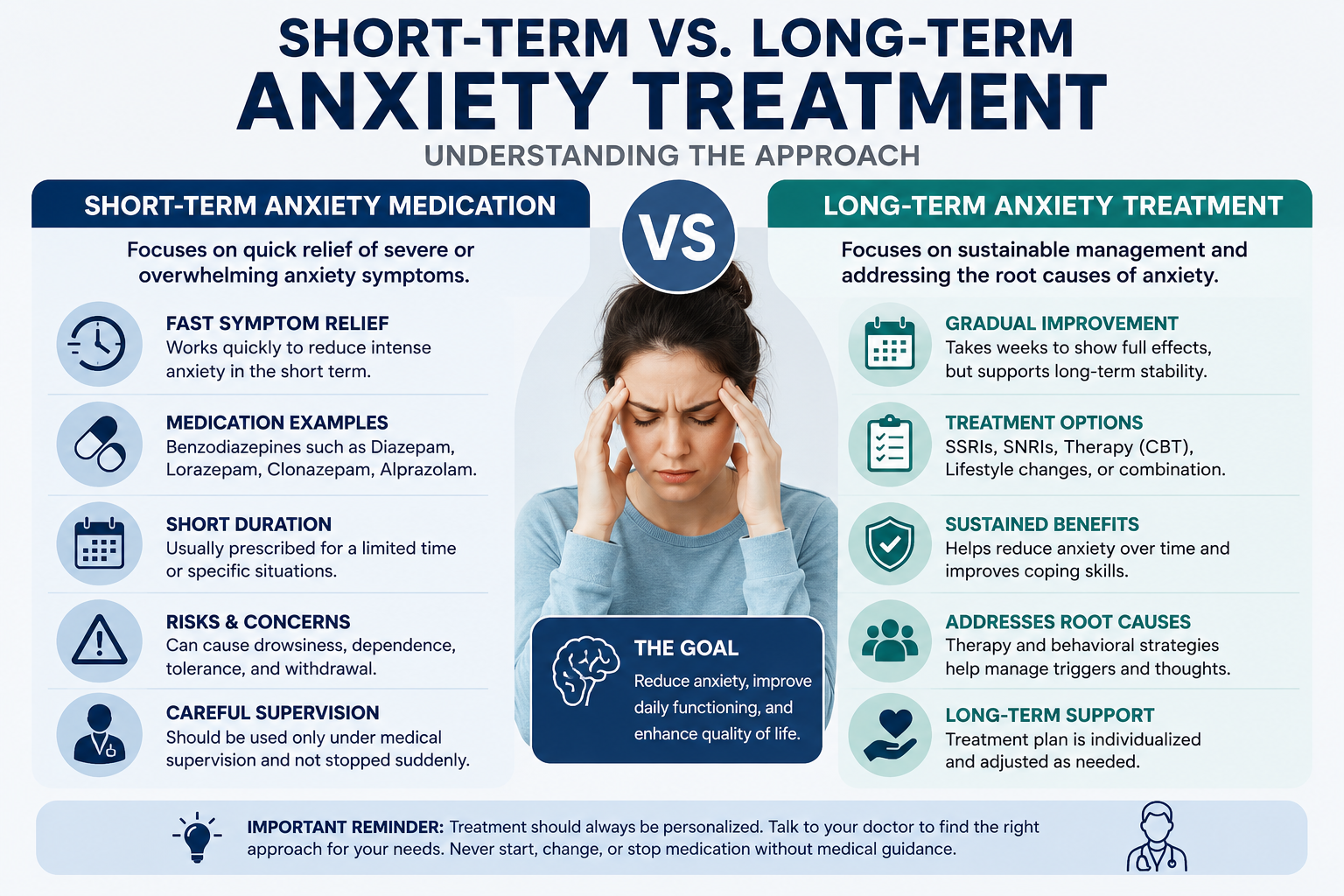
Anxiety treatment isn't always about finding one medication and taking it indefinitely. For some people, treatment may involve a short-term medication strategy, while others may benefit from a longer-term approach involving psychotherapy, antidepressant medication, lifestyle changes, or a combination of treatments.
The right approach depends on the type and severity of anxiety, how long symptoms have been present, other medical conditions, current medications, and an individual's response to treatment.
Understanding the difference between short-term symptom relief and longer-term anxiety management can help explain why doctors may choose different treatments at different stages.
What Is Short-Term Anxiety Treatment?
Short-term treatment generally focuses on helping someone manage intense or disruptive anxiety symptoms over a limited period.
Certain medications can work relatively quickly. Benzodiazepines, for example, can rapidly reduce anxiety symptoms and may sometimes be prescribed for severe anxiety or particular situations. However, their potential for tolerance, dependence, misuse, and withdrawal means they are generally not considered a simple long-term solution.
Medications in this category include benzodiazepines such as:
These medicines are prescription medications and aren't appropriate for everyone.
Why Are Benzodiazepines Usually Used Carefully?
Benzodiazepines can provide relatively rapid symptom relief, but continued use can lead to physical dependence and tolerance. The FDA requires boxed warnings for the entire benzodiazepine class concerning abuse, misuse, addiction, physical dependence, and withdrawal reactions.
They can also become particularly dangerous when combined with opioids, alcohol, or other central nervous system depressants, potentially causing profound sedation and respiratory depression.
This is why the goal isn't simply to find the fastest-acting medication. The clinician has to consider whether the expected benefits outweigh the risks.
What Is Long-Term Anxiety Treatment?
Long-term treatment focuses more on reducing persistent anxiety and improving day-to-day functioning over time.
Depending on the diagnosis, this may include:
Cognitive behavioral therapy (CBT)
Other forms of psychotherapy
SSRIs
SNRIs
Certain other non-benzodiazepine medications
Lifestyle and behavioral strategies
A combination of therapy and medication
NIMH notes that generalized anxiety disorder treatment commonly involves psychotherapy, medication, or both. CBT is a well-studied treatment, while SSRIs and SNRIs are commonly used medications for anxiety disorders.
Unlike benzodiazepines, antidepressants such as SSRIs and SNRIs generally take several weeks to begin producing their full therapeutic effect.
Short-Term vs. Long-Term: What's the Difference?
Short-Term Approach | Long-Term Approach |
Often focuses on immediate symptom reduction | Focuses on sustained symptom management |
Some medications work relatively quickly | Many treatments take weeks to show their full effect |
Benzodiazepines may sometimes be used | SSRIs/SNRIs and psychotherapy may be considered |
Dependence and tolerance are important concerns | Treatment is periodically reassessed |
Usually intended for limited or specific circumstances | May continue for an individualized period |
Does not necessarily address underlying thought patterns | Therapy can address thoughts, behaviors, and coping patterns |
The distinction isn't absolute. A person's treatment plan can change as symptoms, circumstances, and treatment response change.
Where Does Therapy Fit In?
Medication isn't the only option for managing anxiety.
Cognitive behavioral therapy (CBT) is one of the best-studied psychotherapies for anxiety. It helps people identify unhelpful thought patterns, understand how thoughts influence emotions and behaviors, and develop healthier responses.
Psychotherapy can also be used alongside medication. In some situations, combining approaches may provide benefits that medication alone doesn't address.
For example, medication may reduce the intensity of symptoms while therapy helps someone understand why certain situations trigger anxiety and how to respond differently in the future.
Why Doesn't Long-Term Medication Work Immediately?
This is one of the biggest differences between anxiety medications.
Some fast-acting medications can reduce symptoms relatively quickly. SSRIs and SNRIs generally work more gradually and may require several weeks before their benefits become noticeable.
That delay can be frustrating for someone who wants immediate relief.
However, treatment shouldn't be judged solely by how quickly a medication produces a noticeable sensation. The goal of longer-term treatment is generally to reduce anxiety symptoms and improve functioning over time.
Can Short-Term and Long-Term Treatments Be Used Together?
Sometimes, but only when clinically appropriate.
A healthcare professional may determine that someone needs short-term symptom management while a longer-term treatment begins taking effect. This doesn't mean that everyone starting an SSRI or SNRI needs a benzodiazepine.
Treatment should be individualized based on the person's diagnosis, medical history, other medications, and risk factors.
Guidelines have specifically cautioned against routinely using benzodiazepines as a long-term treatment for generalized anxiety disorder; NICE recommends them only for short-term use during crises.
What About Diazepam, Lorazepam, or Alprazolam?
These medicines belong to the benzodiazepine class.
They can be effective for certain anxiety-related conditions, but their risks need to be considered carefully. FDA guidance emphasizes using benzodiazepines at the lowest effective dose and for the minimum duration needed, with careful consideration of dependence and withdrawal risks.
If someone has been taking a benzodiazepine regularly, they should not suddenly stop it without medical guidance. Abrupt discontinuation or overly rapid dose reduction can cause serious withdrawal reactions, including seizures.
What About Lexapro and Other SSRIs?
Escitalopram (Lexapro) is an SSRI commonly used for certain anxiety and depressive disorders.
SSRIs generally aren't intended to provide immediate relief in the same way that benzodiazepines can. Instead, they work gradually, and their benefits may take several weeks to develop.
This is an important reason why someone shouldn't assume that a medication is ineffective simply because they don't feel better after the first few days.
A prescriber can determine whether the medication, dose, duration, or overall treatment strategy needs adjustment.
What If Anxiety Is Causing Muscle Tension?
Anxiety doesn't exist only in the mind. Some people experience anxiety through physical symptoms such as:
Tight shoulders
Jaw clenching
Neck tension
Muscle aches
Restlessness
Headaches
Rapid heartbeat
Difficulty sleeping
When anxiety contributes to persistent muscle tension, treating the underlying anxiety may be an important part of the overall strategy.
However, persistent or severe muscle pain shouldn't automatically be attributed to anxiety. Other medical causes may need to be evaluated.
Is Medication Always Necessary?
No.
The appropriate treatment depends on the individual and the anxiety disorder involved. Psychotherapy may be sufficient for some people, while others may benefit from medication, or from both approaches.
Healthy habits can also support treatment. Regular physical activity, adequate sleep, relaxation techniques, and maintaining social connections can complement professional treatment, although they shouldn't be viewed as replacements for appropriate medical care when anxiety is severe.
What Should You Discuss With Your Doctor?
If you're considering anxiety treatment, useful questions include:
What type of anxiety might I have?
Do I need medication, therapy, or both?
How quickly should I expect improvement?
What side effects should I watch for?
How long might treatment continue?
Are there medications or substances I should avoid?
If I'm already taking a benzodiazepine, how should it eventually be discontinued?
Could another medical condition be contributing to my symptoms?
Keeping a list of your prescription medicines, OTC medications, supplements, and alcohol or other substance use can also help your healthcare professional assess potential interactions and risks.
Frequently Asked Questions
Is short-term anxiety medication better than long-term treatment?
Neither approach is universally “better.” They serve different purposes. Some medications can provide rapid symptom relief, while long-term treatment may focus on sustained symptom management through psychotherapy, antidepressants, or other approaches.
Are benzodiazepines considered long-term anxiety medication?
They can be prescribed for certain conditions, but long-term use requires careful assessment because of risks including tolerance, dependence, misuse, and withdrawal.
How long do SSRIs take to work for anxiety?
SSRIs may take several weeks to begin working, and the timing varies between individuals and medications.
Can therapy be used without medication?
Yes. Psychotherapy, particularly CBT, is an established treatment for several anxiety disorders and can be used alone or alongside medication depending on the person's circumstances.
Can you stop anxiety medication once you feel better?
That depends on the medication and individual treatment plan. Some medications, particularly benzodiazepines, should not be stopped abruptly after regular use. Talk with the prescribing clinician before changing or discontinuing treatment.
Final Takeaway
The difference between short-term anxiety medication and long-term treatment comes down largely to the treatment goal.
Fast-acting medications such as benzodiazepines may have a role in carefully selected situations, but their risks make them unsuitable as a simple long-term solution for everyone. Longer-term approaches may include CBT, SSRIs, SNRIs, other medications, lifestyle strategies, or combinations of these treatments.
The best treatment plan isn't necessarily the one that makes anxiety disappear the fastest. It's the one that safely reduces symptoms, improves daily functioning, and addresses the individual's underlying needs over time.